|
You have products
in your cart.
New User Register

Login Member:
|
| |
| Advertise on Goalfinder |
| |
Now you can advertise on Goalfinder to
reach schools, colleges, teachers, parents,
students and professionals. |

|
|
|
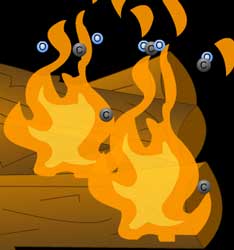
Animated K8 + science " Chemistry of wood " . Wood's chemistry is tightly interlinked to its biology, with a common meeting point at cellulose, the biological unit of wood. The study of cellulose is the study of wood and the chemical process that take place due to its dissociation in presence of heat are what we call as burning. This chemistry animation gives in-depth information about how wood burning works.
|
Check
price in your currency
|
Category : Science
Type : Animation
Total animation length:
5 minutes:30 sec
The animation covers:
Cellulose structure in wood
Chemical bonding in wood
Chemistry in wood burning
Burning on the basis of bond
How CO2 formation helps in burning
Why wood burns but diamond does not (even though both
are made up of carbon)?
|
|
|
| Prices are for single user license, refer for School license here, You can also Subscribe
to view full animation, More
.. Note: (Some full
version software does not contain sound), |
|
|
|
|
|
Chemistry of wood
|
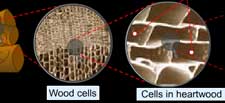
Going inside wood to wood-cell-and
all the way upto cellulose
|
|
|
|
|
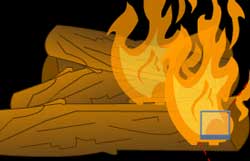
Burning of
wood is nothing but a chemical process
|
Disintegration of cellulose in presence
of heat
|
|
|
|
Liberation
of carbon and oxygen on burning of wood
|
|
WOOD
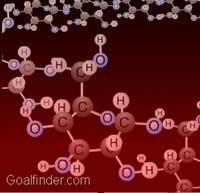
The walls of all the plant cells are made up of cellulose.
It is very tough substance, made up from long molecules,
which are laid down in a crisscross pattern, giving strength
and rigidity to the cell. Cellulose is natural polymer (C6H10O5)
n. cellulose is a polysaccharide with
glucose as its monomer. Glucose molecule is result
of chemical bonding of carbon, hydrogen and oxygen
When wood burns, it releases energy in the form of heat
and light. As we know wood is a chemical composition
of carbon, oxygen and hydrogen. Hence when we supply heat
to wood the bond between glucose molecules breaks and carbon
oxygen and hydrogen become free. In the presence of oxygen,
carbon produces carbon monoxide and carbon dioxide.
In this reaction carbon is element that reacts with oxygen
in air and produces heat and light, however in our daily
life we use many carbon-containing materials but not all
are burning materials such as diamond.
In diamond covalent bonds in diamond are too strong
in comparison to wood therefore diamond does not burn.
|

| Purchase to
download and view unlimited times full-length animation or subscribe
and view online all animation. More... |
|
|
|
|
| |
|
| Q1: |
how to define the chemical Trasforma |
serhane |
17/9/2011 |
| Ans: |
|
| Q2: |
Exactly what is burning, molecules react to cause fire or burning? |
Kirk scott |
18/10/2009 |
| Ans: |
|
| Q3: |
what is combustion? |
sid |
17/8/2009 |
| Ans: |
|
| Q4: |
WHAT RESTRICATION ENZYME |
ghorbat |
6/12/2008 |
| Ans: |
|
| Q5: |
If a tree is struck by lighting does it molecules change to make it not burn in woodstove/fireplace? |
Kimberly |
23/9/2008 |
| Ans: |
|
| Q6: |
why does wood spit when burning sometimes? |
elliot |
13/8/2007 |
| Ans: |
Trees carry sap through their xylem cells like vessels and tracheids, once they are cut they need to be dried or seasoned by stacking for minimum nine months or oven dried to dry out the moisture from these cells , unseasoned wood contains sap that spits out sparks as it burns. Most evergreens are difficult to dry and retain sap while hardwoods burn well. Logs seasoned for a year still have moisture as they absorb it from the environment, a 22% moisture content is taken as dried. |
| Q7: |
Im am being told that for each 1 ton of firewood, burning will release 3.66 tons of CO2. My understanding is that you cannot get more weight of something than was origionally, infact byproducts such as the ashes must be deducted as well. |
Bill |
10/3/2007 |
| Ans: |
Firewood contains about 44-50% carbon by weight, 1 kg of firewood burns to produce 1.88 kg of CO2, so one ton will produce 1.88 ton of CO2, please note the weight is higher due to atmospheric O2 combining with C (it adds 32 kgms oxygen to 12 kgms of carbon). Ash content varies from 0.5-2% by weight of wood so it does not take away much carbon. |
| Q8: |
what is nitroselolose? |
hoshang |
25/11/2006 |
| Ans: |
Nitrocellulose (cellulose nitrate, flash paper, guncotton) is a highly flammable smokeless substance. Formed by HNO3 and H2SO4 reaction with cotton converting cellulose into cellulose nitrate and water. H2SO4 prevents dilution of HNO3 by water produced. 2HNO3+ C6H10O5 → C6H8(NO2)2O5 + 2H2O. All the hydroxyl groups of the cellulose molecule are esterified insoluble compound is formed. Incomplete nitrification produces soluble cellulose nitrate pyroxylin. Uses: inks and coatings, leather finishes. |
| Q9: |
what are the names of wood cells called? |
emily |
14/3/2006 |
| Ans: |
"Wood" classification is a study by itself, but generally wood cells are commonly separated into sapwood (the living outer portion of the tree-live cells) and heartwood (dead inner portion of the tree- containing dead cells)- does this answer your question? |
| Q10: |
I dont know how a diagram of burning looks like, i need a diagram of a procces of burning |
Tom |
28/2/2006 |
| Ans: |
We are putting one in our downloads section since it is part of an animation, we are unable to explain it fully in a single slide but you may get an idea. You can view, download, distribute or use it on any site as long it is for non-commercial purpose and our site address remains on it. |
|
|
|